
Delivery App Promotion Fees and Discounts: Who Really Pays for the Offer?

A customer opens the app, sees $5 off or free delivery at your restaurant, and orders. The discount feels like the platform's marketing budget at work. On many agreements, it is partly or entirely yours: the offer amount, and sometimes a promotion fee on top of it, comes out of the same payout that already carries your commission, refunds, and adjustments.
Promotion costs are the least visible part of delivery app fees because they arrive mixed into order lines instead of as one clear charge. This guide explains how the split usually works, where to find it on your statement, and how to tell whether a promotion is actually making you money.
How Delivery App Promotions Are Funded
There are three common funding patterns, and your agreement decides which one applies:
Platform-funded offers. The app pays the full discount, usually for platform-wide campaigns it controls. Your payout shows the full order value.
Restaurant-funded offers. You opted in, or were enrolled, in an offer such as a percentage off, a spend threshold discount, or free delivery, and the discount amount is deducted from your payout.
Split offers. The platform funds part and the restaurant funds part, sometimes with a separate marketing or promotion fee charged per order or per week on top of the discount itself.
The trap is not any one pattern. It is not knowing which pattern each live offer at your restaurant uses. Offers get launched from the merchant portal in a minute during a slow week, then run for months, deducted quietly, order after order.
Why Promotion Costs Stay Hidden
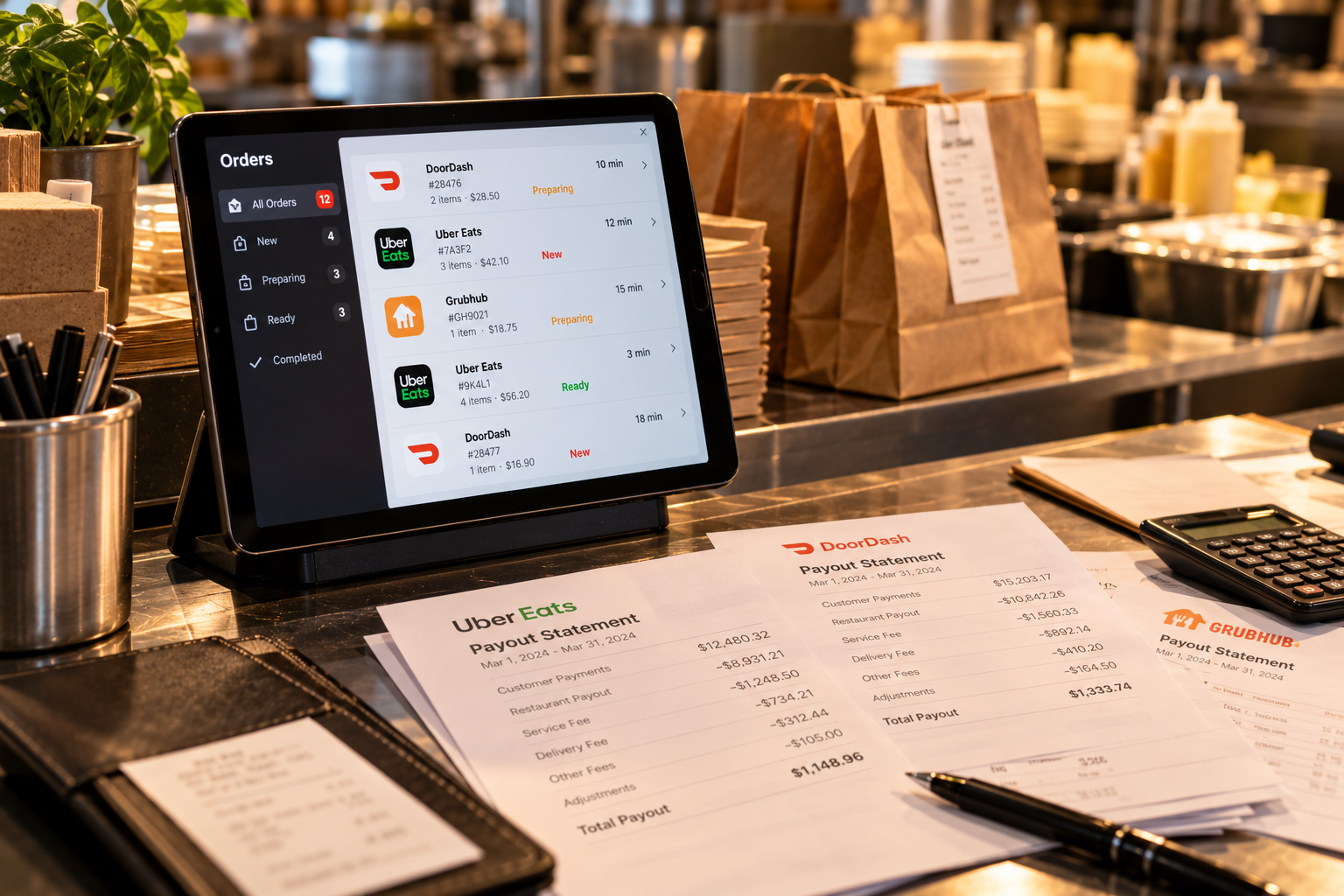
First, the deduction is blended. A funded discount reduces the order line itself, so the statement total simply looks smaller rather than showing a fee. Second, the reporting splits across screens: the offer lives in the marketing tab, the money lives in the financial tab, and nothing joins them for you.
The wider fee picture makes this easy to miss. Delivery problems already push money out of payouts at scale: a Circuit survey of 1,066 American consumers, reported by Restaurant Business, found 52% of customers whose delivery went wrong asked for a refund, and each of those refunds is another deduction competing for your attention in the same statement. A promotion line has to be looked for on purpose, during a payout statement audit, or it is never seen at all.
How to Check What a Promotion Really Cost You
Run this check for each platform, DoorDash, Uber Eats, and Grubhub, once a month:
List every live offer. In the merchant portal marketing section, note each active promotion, its dates, and its funding terms as written there.
Pull the matching orders. For one full week, list the orders that used each offer and the amount deducted per order.
Add the fees. Include any promotion, marketing, or campaign fee lines tied to the same period, not just the discount amounts.
Compare against the contract. The commission and fee rates on the statement should match your signed agreement. A rate that has drifted, or a deduction your agreement does not describe, is a dispute candidate, the same as a bad refund in how restaurants dispute unauthorized refunds.
Judge the offer on margin, not orders. An offer that lifts order count while costing more per order than the food margin it brings in is a loss with good marketing. Keep offers that bring repeat full price customers; cut the rest.
Which Promotion Charges Can Be Disputed?
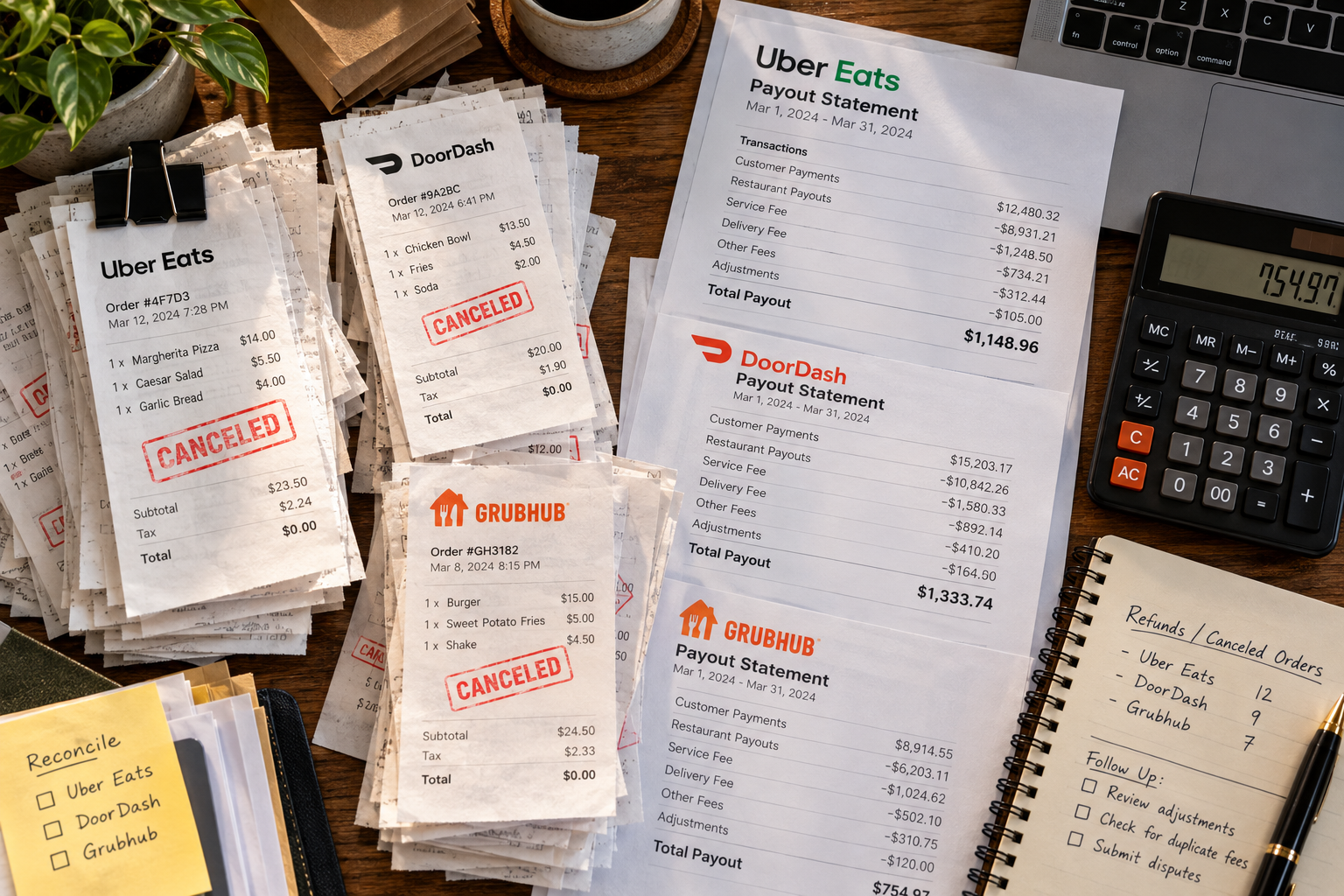
You cannot dispute a discount you agreed to fund, charged exactly as agreed. You can dispute:
Deductions from offers you never enrolled in, or after an offer's end date.
Discount amounts larger than the offer terms state.
Duplicate promotion fees for the same order or week.
Any promotion or marketing line that does not appear in your agreement at all.
These are fee errors, and they belong in the same weekly dispute routine as refunds and chargebacks.
Keeping Promotions and Refunds in One Routine
Promotion checks fail when they are a separate project. Put the monthly offer list next to the weekly statement read: refunds, cancellations, chargebacks, fees, and promotions all come out of the same payout, so they should all be read off the same statement.
That combined routine is Jelly's daily work. Founded in 2021, Jelly audits every payout line for restaurants across hundreds of locations on DoorDash, Uber Eats, and Grubhub, disputes bad charges including fee errors, and has recovered more than $1.6M with an 89% success rate on refund recovery. See the plans at gotjelly.com/plans.
Frequently Asked Questions
Who pays for discounts on DoorDash, Uber Eats, and Grubhub?
It depends on the offer and your agreement. Platform-wide campaigns are often platform funded, while offers a restaurant opts into are usually funded by the restaurant, sometimes split, and sometimes with an added promotion fee. The funding terms are in the offer setup in your merchant portal.
Where do promotion costs appear on a payout statement?
Usually inside the order lines themselves, as a reduced order value or a discount deduction, plus any separate promotion or marketing fee lines for the period. They rarely appear as one clear total, which is why they have to be added up offer by offer.
How can a restaurant tell if a promotion is profitable?
Add everything the offer cost for a week, discounts deducted plus any promotion fees, then compare it with the margin on the extra orders it actually brought in, not total orders during the offer. If the cost beats the added margin, the offer loses money.
Can a restaurant dispute a promotion charge?
Yes, when the charge does not match the offer terms or your agreement: deductions after an offer ended, amounts above the stated discount, duplicate fees, or promotion lines your agreement never authorized.
How often should restaurants review their delivery app promotions?
Monthly for the full offer inventory and funding terms, and weekly as part of the payout statement read, so a new or changed offer is caught in its first payout cycle instead of its tenth.


Comments