
False Refund Claims: What Restaurants Can Do When a Customer Lies About an Order

Some refund claims are honest mistakes. The order really was wrong, or really was late, and the customer deserves the money back. Some are not. A customer says the food never arrived when the driver handed it to them. A customer says an item was missing that was in the bag. A customer says the food was cold, damaged, or wrong when it was none of those things. The platform refunds them anyway, and the money comes out of your payout.
This is not a small problem. Incognia's Frontline Report, Gig Economy Edition, published in February 2025, found that refund abuse was 48% of the consumer-side fraud detected on food delivery and ride-hailing platforms, tied with promotion abuse as the top consumer fraud type. The Merchant Risk Council's 2024 Global eCommerce Report found that refund abuse impacts nearly 50% of merchants worldwide. And a 2026 survey of merchants found that 52% had suffered false "never arrived" claims, the most common form of refund abuse. The scale is why platforms refund first: sorting real claims from false ones costs them more than paying both.
What a False Refund Claim Looks Like
False claims follow a few familiar scripts. Learn them and you will spot them on your own statement:
"Never arrived." The most common false claim. The order was delivered, often confirmed by the driver, and the customer reports it as missing. This is the claim behind that 52% merchant figure.
"Wrong item" that was right. The customer reports an item as wrong or missing that was packed exactly as ordered. The ticket and the bag agree, and the claim does not.
"Damaged or cold" with no damage. The customer reports food as inedible or damaged, with no photo, on an order that left the kitchen in good shape and arrived on time.
Repeat claims from the same customer. One customer, several orders, several refunds. A pattern of claims is the strongest signal of abuse, and platforms track it even when they still refund.
Claims on high-value orders only. The refund request always seems to land on the biggest ticket of the week, never the small one.
One claim proves nothing. A customer can honestly misremember an order, and a driver can honestly deliver to the wrong door. But when the same claim repeats, or the claim contradicts your own record, it is worth disputing.
Why the Platforms Side With the Customer
The platforms refund first for a simple reason: the customer is theirs, and the restaurant is a supplier. A customer who feels cheated stops ordering, and that costs the platform far more than one refund. So the dispute process is built around the customer, and the restaurant has to make the case after the money is gone.
That does not mean the restaurant always loses. It means the restaurant needs evidence, and the evidence has to be ready before the claim arrives. A dispute filed with a ticket, a packed-order photo, and a handoff record is a different conversation from a dispute filed with "we packed it right." What evidence wins a delivery app refund dispute is the full checklist.
The platform refunds first and asks later. The restaurant that keeps a record gets its money back. The restaurant that does not, pays.
How to Dispute a False Refund Claim
Dispute every false claim you can prove, even a small one. Each successful dispute does two things: it returns your money, and it builds a record that protects you the next time the same customer claims again.
Step 1: Pull your record before you write anything. The order ticket, the packed-order photo, the time the order left the kitchen, and the driver handoff. If you have none of that, the dispute is weak, and the fix is in your process, not the portal.
Step 2: Dispute in the merchant portal, in writing. State what was packed, what the customer claimed, and where the two contradict each other. Keep it factual and short. Attach the photo and the ticket.
Step 3: Watch the deadline. Refund disputes have short windows, and a missed deadline ends the dispute no matter how strong the evidence is. Delivery app refund deadlines covers the window on each platform.
Step 4: Flag repeat claimants. If the same customer has claimed more than once, say so in the dispute and ask the platform to review the pattern. Platforms track customer claim history, and a pattern changes how a dispute is read.
Step 5: Escalate the ones that matter. A single $15 false claim is annoying. A pattern worth hundreds a month is a fraud case, and it deserves a direct conversation with your platform rep, not just a portal ticket.
Chargebacks are the sharper version of the same problem. A customer who disputes the charge with their bank instead of the app triggers a chargeback, which costs you the order value plus a fee. Delivery app chargebacks vs refunds explains how the two differ and what to do about each.
How to Make False Claims Harder to File
Prevention does not stop every false claim, but it makes most of them easy to beat:
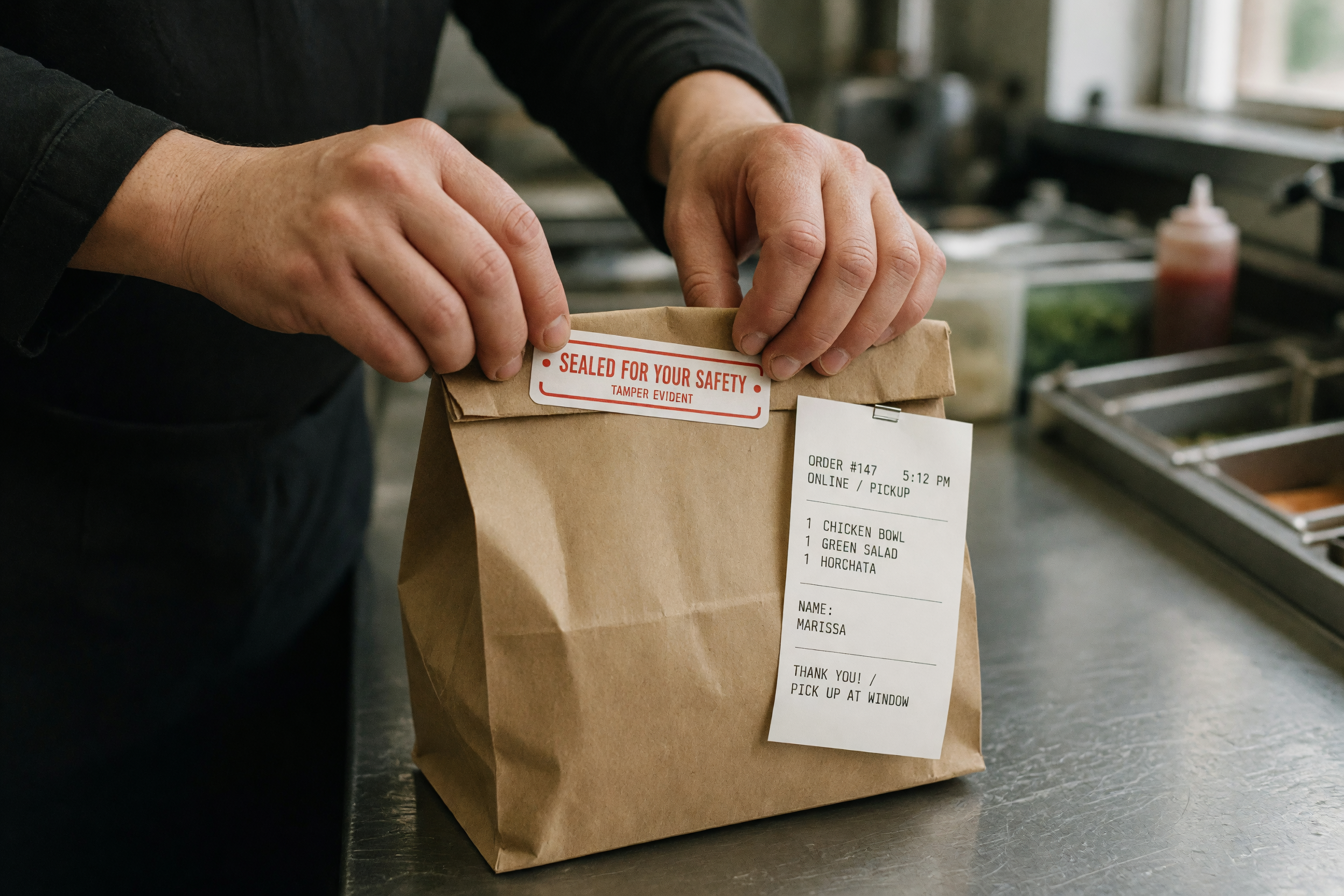
Seal every bag with a tamper-evident sticker. A sealed bag with the ticket attached is hard to claim against. If the seal is intact at delivery, the contents were what left your kitchen.
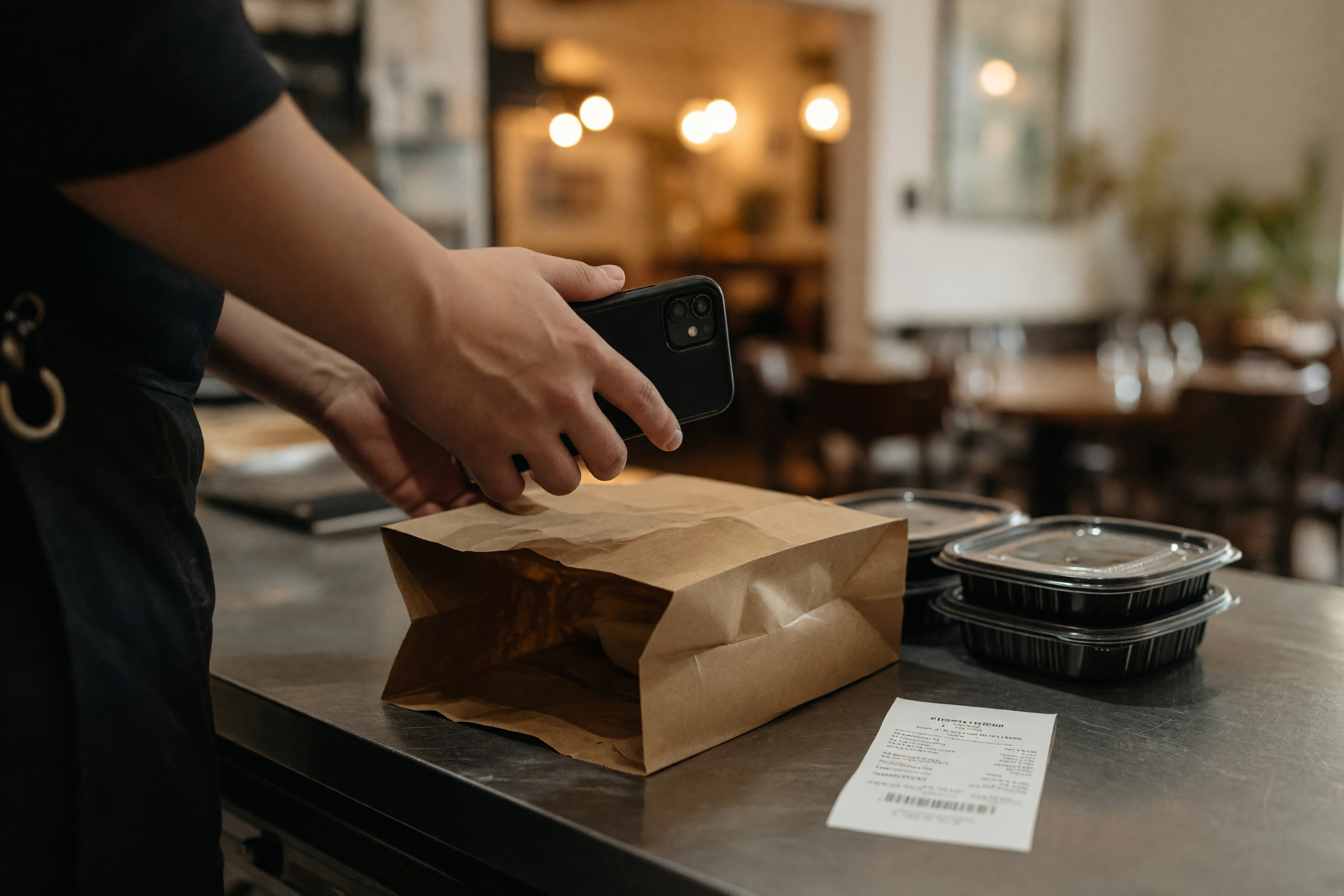
Photograph the packed order. Two seconds per order, and it is the single best piece of dispute evidence. Keep the photos for at least 30 days.
Record the handoff. Note which driver took which order and when. The platform has GPS, and your handoff note ties your record to theirs.
Audit the statement weekly. False claims hide in long statements. A weekly audit catches them inside the dispute window instead of after it closes. How to audit your delivery app payout statement is the ten-minute version.
Track repeat claimants yourself. A simple log of customer names and claim counts shows the pattern faster than any platform dashboard will.
The attitude matters too. A Cifas survey of 2,000 UK adults in May 2025 found that 19% had either falsely claimed a failed delivery or knew someone who had, and 35% of 16 to 24 year olds said they would be willing to lie to get a refund. Some customers do not think of it as fraud. That does not make it your cost to absorb.
Frequently Asked Questions
What is a false refund claim on a delivery app?
A false refund claim is a customer asking for a refund for a problem that did not happen: an order that arrived being reported as never delivered, an item that was packed being reported as missing, or food reported as damaged when it was fine. It is also called first-party fraud or refund abuse.
How common is refund abuse on delivery apps?
Incognia's 2024 Frontline Report found refund abuse was 48% of consumer-side fraud on food delivery and ride-hailing platforms. The Merchant Risk Council found it impacts nearly 50% of merchants, and 52% of merchants reported false "never arrived" claims in a 2026 survey.
Can restaurants dispute a false refund claim?
Yes. Dispute it in the merchant portal with the order ticket, a photo of the packed order, and the handoff record. Flag it if the same customer has claimed before. Dispute inside the platform deadline, or the dispute closes no matter how strong the evidence is.
What evidence wins a false refund dispute?
The order ticket, a photo of the packed bag with the ticket attached, a sealed bag with a tamper-evident sticker, and a record of which driver took the order and when. Together they show the order left your kitchen complete and sealed.
How do restaurants prevent false refund claims?
Seal every bag with a tamper-evident sticker, photograph each packed order, record the driver handoff, audit the payout statement weekly, and keep a log of repeat claimants. Prevention makes false claims easy to dispute and harder to repeat.
Jelly audits every payout line and disputes bad charges for restaurants on DoorDash, Uber Eats, and Grubhub. Founded in 2021, Jelly has recovered more than $1.6M for restaurants across hundreds of locations, with an 89% success rate on refund recovery. The scale of the problem is in delivery app refund fraud is costing restaurants billions. How the service works is in restaurant refund recovery service, and the plans are at gotjelly.com/plans, where Pro comes with a 30-day free trial.


Comments